
Transitional justice as identity-building
Much work on transitional justice begins from accountability: how democracies reckon with authoritarian violence, compensate victims, recover records and reform institutions. My research adds a different question. What happens when the institutions built to address the past also help define the political community of the present?
My 2022 article, “Teaching Sleeping Dogs New Tricks? Transitional Justice as Identity-Building”, argued that Taiwan’s transitional-justice process is also a site of political identity formation. Institutions, categories, commemorative practices and public narratives do not simply recover an already settled past; they participate in defining what kind of political community Taiwan understands itself to be.
Boundary-making, inclusion and exclusion
My current Harvard project, which includes a visiting research period at National Taiwan University from December 2026 to January 2027, develops the other side of that argument: an inclusionary justice agenda can still generate patterned exclusions. The project asks whom transitional justice addresses, which experiences become legible within its institutional language, and how geography, language and competing narratives of identity shape the boundaries of recognition.
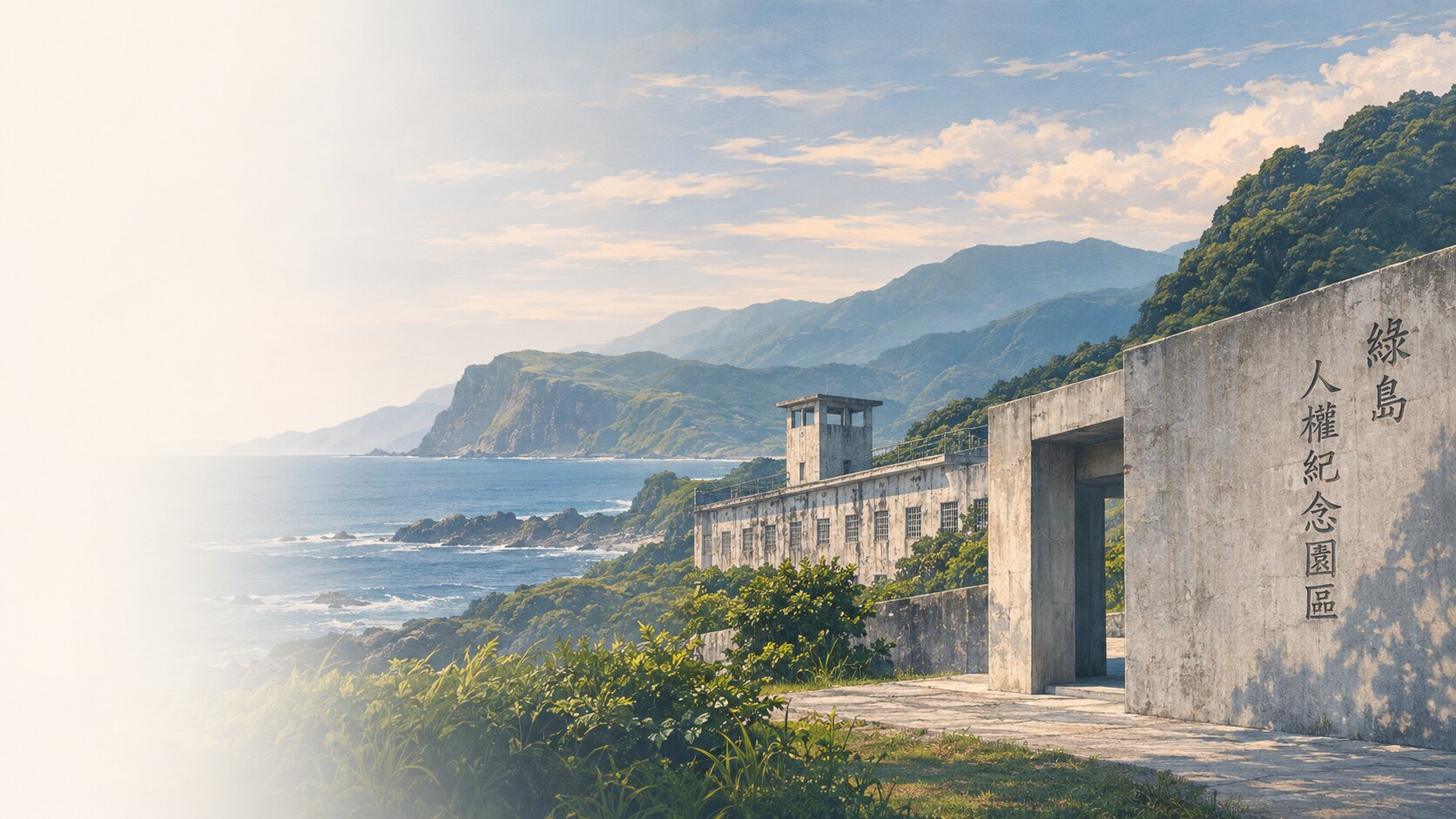
Fieldwork at sites including Green Island and the National Human Rights Museum makes those questions concrete. Memorial landscapes, institutional histories and the spatial organisation of remembrance provide evidence for how authoritarian legacies are translated into contemporary narratives of political belonging.
Memory, institutions and political order
This programme links memory politics to a wider concern with political order. Transitional justice matters not only because it determines how a state judges past violence, but because it helps establish legitimate categories of victimhood, responsibility and political membership. Those categories may be contested, revised or unevenly distributed.
The research therefore connects the study of Taiwan to broader International Relations questions about legitimacy, identity and the production of order. It also links to my work on Taiwan’s international positioning: domestic narratives of political community shape how Taiwan presents itself externally, even as diplomatic constraints generate different forms of political agency.
Current research
My current fieldwork examines how geography, language and competing narratives of identity shape who is recognised within Taiwan’s transitional-justice institutions and public memory. It extends the identity-building argument by asking how the same institutions that articulate political community can also produce uneven boundaries of inclusion and exclusion.
This work sits alongside forthcoming research on German encounters with Taiwan’s transitional-justice institutions and earlier published work on transitional justice as identity-building. Together, these projects connect memory, legitimacy and belonging to the wider question of how Taiwanese political identity is made and represented.